FAT AND GETTING FATTER
What has research by the Trust for America's Health reported?
What are the risks that go hand in hand with obesity?
Why does the article make reference to “A tale of two futures”?
How are obesity and education and income associated?
Which are the most successful tactics to tackle obesity according to Public Health experts?
HOUSE BILL HOPES TO CURB PRESCRIPTION DRUG ABUSE
Which drugs are compared to prescription drugs concerning their effects?
What kind of pharmaceuticals does the Bill prohibit/ban?
Which age group is the one that uses prescription drugs the most? Why?
What are BYOP parties?
jueves, 23 de marzo de 2017

martes, 4 de octubre de 2016
Personal response on TCKs
Respond to the following stimulus using any suitable text type that you have studied in class. Write between 150 to 250 words.
"If provided with the right support and guidance, TCKs are exactly what today and tomorrow’s world requires. They don't just think and act global, they are global."
Famous Third Culture Kids:
 |  |
1. Barack Obama: Barack Obama is the 44th, and current president of the United States. Barack had an American mother and a father from Kenya, Africa. Obama's mother divorced his African father and remarried an Indonesian man. After that, Obama lived in Indonesia for a while. He is a Third Culture Kids as well as a political leader
2. Kim Jung Un: Kim Jung Un is the Supreme Democratic Leader of Korea. It has also been told that he was indoctrinated in Switzerland until the age of 15. This is another third culture kid that is in politics
3. Uma Thurman: This famous Hollywood Actress is also a third culture kid who was born in Boston, Massachusetts, but after nine years, she moved to a Himalayan town in India. Uma's father was a writer and named her Uma, which means light.
4. Freddie Mercury: Did you know that Freddie Mercury, the heroic lead singer of the rock band Queen, is a third culture kid?!! Well, he is. Freddie was born in Tanzania and then moved to Bombay, India when he was only ten years old. After that, Freddie moved to England at the age of seventeen.
5. Kobe Bryant: The legendary 5 time NBA champion, with the name of Kobe Bryant is also another third culture kid! Kobe grew up in Reiti, Italy until the age of fourteen and learnt more about basketball and has some of his skills from his father who was a basketball player too.
2. Kim Jung Un: Kim Jung Un is the Supreme Democratic Leader of Korea. It has also been told that he was indoctrinated in Switzerland until the age of 15. This is another third culture kid that is in politics
3. Uma Thurman: This famous Hollywood Actress is also a third culture kid who was born in Boston, Massachusetts, but after nine years, she moved to a Himalayan town in India. Uma's father was a writer and named her Uma, which means light.
4. Freddie Mercury: Did you know that Freddie Mercury, the heroic lead singer of the rock band Queen, is a third culture kid?!! Well, he is. Freddie was born in Tanzania and then moved to Bombay, India when he was only ten years old. After that, Freddie moved to England at the age of seventeen.
5. Kobe Bryant: The legendary 5 time NBA champion, with the name of Kobe Bryant is also another third culture kid! Kobe grew up in Reiti, Italy until the age of fourteen and learnt more about basketball and has some of his skills from his father who was a basketball player too.
lunes, 3 de octubre de 2016

TEXT TYPES REVISION #12: SPEECHES
Writing a Speech
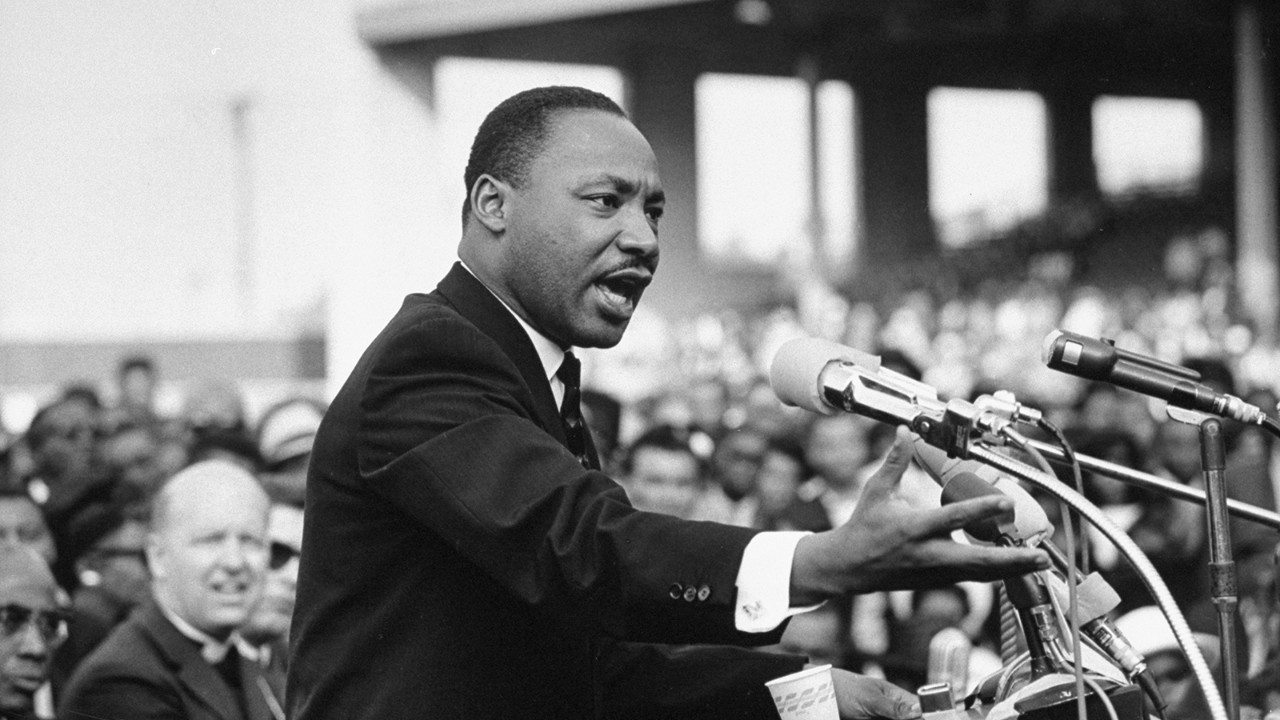
A speech is almost always formal. At the
same time, you will have to make your speech engaging so be careful to include
anecdotes (stories to personalize your ideas), statements to grab attention
(either shocking, jokey or inspiring) and clear structure.
Your structure needs to have clear
paragraphs, with a topic sentence in each one, followed by evidence and
explanation of your main idea.
You need to use rhetorical devices to show
your mastery of this text form.
A good
speech should contain the following rhetorical devices:
- Rhetorical
questions
- Repetition
- Lists
of three
- Contrast
- Emotive
language
- Direct
address
- Evidence
(statistics, quotations, examples)
Here is
an example of a speech to a group of students.
See how
the speaker uses the language devices above.
“Fellow
students, Have you ever felt afraid to
walk around the school by yourself? 1 In
a recent survey carried out by the school council, 70 percent 2 of us
have been bullied at some time in our life at school.
1Direct address. The speaker
is addressing the audience directly, asking them to think about their own
experiences. It is also a rhetorical question.2Evidence. This is an
example of evidence to make the argument more convincing.
3Lists of three. A list of
three words together sounds really powerful when it is said out loud.
4Emotive Language. Words
that inspire strong emotions. These three words are examples of emotive
language.
5Rhetorical Questions. The
audience aren't expected to give an answer, but the speaker wants them to think
about what he is saying.
6Repetition. It is effective
to repeat the word 'afraid' in a speech about bullying.
7Contrast. 'Coward'
contrasts with 'terrify'.
8Repetition. Another example
of repetition! Also direct address in the exhortation “join me”.
Points
to consider
- Opening, which quickly catches the
audience’s attention, and at the same time establishes the topic and purpose of
speech?
- Ideas and information organized according
to purpose of speech
- Included information must follow a
logical flow, which will be meaningful to both the speaker and listeners
- Conclusion, which relates to the content
and purpose of the speech, it may include, for example, a question, a
recommendation, or a warning. For instance, "Why should we learn about the
diversity of structures in different text types?" (rhetorical question is
used).
Language
features:
- Address the audience; for example,
“ladies and gentleman”, or “fellow students”, depending on the situation that
is applied.
- Repetition and restatement of ideas to
help your listeners follow the ideas. (Not too repetitive, this is achieved by
stating your ideas differently each time to reinforce the same piece of
information/ideas/views in a way that it is interesting)
- Personal language
- SOME colloquial language
- Use of questions to set up a
'conversation' with listeners
Be fluent, and eloquent with how you
compose your speech to get your point of view across to the TARGET audience.
TEXT TYPES REVISION #11: NEWS REPORTS
Writing a Newspaper Report

Reports usually appear in newspapers. They tell
readers about events that have been happening in their local area, or national
or international news. Newspapers are read by people who want information about
something that has happened. They want details quickly so reports have to be
easy to read and have a snappy presentation style.
When you plan your news story, remember that
newspaper reports usually provide the answers to the questions WHO, WHAT,
WHERE, WHEN , WHY, HOW?
Look at this example of a newspaper report
AGAINST ALL ODDS
Alex
Watson (Byline)
Wed
Feb25, 2016
Sydney (Placeline)- Christopher Brodie is
this morning celebrating his gold medal success in the paralympics 100m sprint.
Yesterday, in the packed
stadium in Sydney, Australia, where the games have been taking place all week,
Chris ran the race of his life to cross the line in the gold medal position. (Lead)
For any athlete a
championship medal is the ultimate achievement, but for Chris it was also the
culmination of years of determination and courage. The 20 year old was just 5
when he had to have his right leg amputated below the knee. The pain caused by
his artificial leg was not enough to stop the lively youngster from Motherwell
running around living life to the full.
When he joined the local
athletics club he never dreamt that he would end up an Olympic champion. Now,
thanks to the pioneering work of sports scientists and the doctors at Glasgow’s
St Thomas’ Hospital, Chris has been able to take advantage of the latest sports
technology, a new prosthetic sports leg.
“The new leg is made of
light weight materials and the foot section has as close to normal foot
movement as an artificial leg can get,” said Ken Brown, one of the doctors who
worked on the project. Chris backed up Dr. Brown’s claim when he said that the
new leg allowed for fluid movement and a much less cumbersome running style.
Certainly, the benefits the
artificial leg will bring to sports women and men all over the world could be
seen yesterday in Sydney, when Chris Brodie showed the world what a powerful
combination courage and innovation can be.
Can you identify the WHO, WHAT,
WHERE, WHEN, WHY and HOW (Lead) in this news
report?
- Who is the main person the story is about?
- What has happened to him?
- Where did the event take place?
- When did it happen?
- Why did it happen?
- How did it take place?
Well done if you spotted
that the main person in the story is Chris Brodie, who won the gold medal at
the paralympics in Sydney the day before the report was written. He lost his
right leg as a child and, aided by advances in sports medicine and his
determination to succeed against the odds, has become a world class athlete.
Now study the report again. Look closely
for the key features of a newspaper report.
- the headline catches the reader's attention
- the first paragraph gives the main point of the story and answers
the question who
- the following paragraphs provide answers to the questions what, where, when, why and how
- the paragraphs are short and punchy, giving information in a clear
and concise way
- there are references to what people said, either using direct
speech (use of inverted commas indicates what Ken Brown actually said) or
reported speech (no inverted commas - the main points of Chris Brodie's
speech but not in the actual words he said)
- use of past tense because the report refers to an event which has
already taken place
- use of columns in accordance with newspaper presentation
www.bbc.co.uk/bitesize/standard/english/lit_form/newspaper/revision/1/
Sample
of Political News Report
Mayoral Candidate
David Pearson Wins Close Election
Jackie Smith
Wed March 24,
2016
Democrat David Pearson became the newest mayor
of Danville after a close election ended Tuesday night. Pearson defeated his
opponent, Republican Shirley Owens, by just 27 votes. Many local officials had
predicted a close race, but no one knew it would be decided by such a slim
margin. After the results came in late Tuesday night, Pearson held a press
conference at his campaign headquarters to announce his victory and thank his
opponent.
“I want to thank Shirley for running a clean
campaign and keeping things civil, despite a few of our heated debates,”
Pearson said to a round of applause. Pearson was surrounded by his family,
including wife Trina and son Michael, as well as several top members of his
campaign staff. Pearson only spoke for a few minutes, clearly tired after a
long day of awaiting results.
Surrounded by friends and family, Shirley Owens
spoke from her office on the other side of town. “Most importantly, I want to
thank the citizens of Danville for participating in the political process, and
I have loved meeting and working with so many of you over the past two years,”
she said before congratulating Pearson on his win. She spoke for ten minutes
before taking a few questions. According to Owens, she hopes to continue
working in the local government, although she announced no specific plans.
Several citizens of Danville were surprised
that Owens lost, as she had come out ahead in several polls taken over the past
few months. However, most local residents were not very concerned with the
results, as the majority of the town noted that both Pearson and Owens had
similar views on many popular issues.
This election actually had one of the lowest
turnouts in Danville history. Sarah Burgeson, a local representative who works
on the election board, attributed this to people’s lack of concern for either
candidate. “Most people felt David and Shirley had similar views, so they
weren’t really concerned with choosing one over the other,” said Burgeson.
Pearson is expected to take over as mayor at the beginning of next month.
Downloaded from http://www.wikihow.com
TEXT TYPES REVISION #10: REPORTS
Tips on
writing REPORTS
-
Formal pieces addressed to one´s
superior
-
Types: Assessment/ Informative/
Proposal
-
A report
is a formal document which you write to a figure of authority to describe an
experience such as attending a conference or taking part in a project.
1. The
organisation of a Report
A report
should have a title and subtitles (or subheadings) and be divided into clear
sections. There is usually an introduction and a conclusion
2. Useful
language / Phrases to use in a Report.
In the introduction
- The aim of this report is to...
- The purpose
of this report is to outline...
- This report will also
provide some recommendations on...
In the conclusion
- I strongly recommend...ing
- It would be
highly advisable to...
- I would no
doubt suggest...ing
- I also
believe we should...
- Remember to
include this information at the top
To:
From:
Subject:
Date:
Introduction/Purpose
Formulaic Language
Body
Subheadings with different aspects, proposals,
negative/positive points
Conclusion
Opinion/Recommendation/ Summary
-
Use formulaic Language
-
Don´t sign reports
-
Use formal register throughout
-
Avoid contractions
-
Address the addressee
To: Annual Student Games Organizers
From: Jack Stewart
Subject: Annual Student Games 2016
Date: September 26th
Introduction
The aim of
this report is to describe my experience of attending the Annual Student Games
in London, which took place in August of this year. This report will also give
some recommendations for the organisation of next year´s event in Lima, Perú.
Accommodation, food and transport
Finding cheap
accommodation in London was firmly easy. There were plenty of youth hostels and
bed and breakfasts available, which offered incredible discounts to Latin
American students. And, as breakfasts and dinners were included, I only had to
worry about paying for lunch (8-10 dollars a day).
Travelling
through London was not difficult. There were special buses which could take you
for free to the venues of the sporting events.
The social programme
The event
lasted a week and was packed with enthusiastic young people. Universities from
all over the world sent their "champion Olympians" to participate in
track and field, football, basketball and swimming competitions.
The highlight
of the event was, of course, the closing ceremony, in which the winners were
presented with a medal and a posy by no other than the Queen herself.
Communication
The
organisers of the event had the innovative idea of announcing the schedule for
the games via e-mail, as 99% of students use smart phones and iphones. However,
there was a problem with the wifi signal in some parts of the city, which made
internet connectivity slow and in some cases impossible.
Recommendations
for next year´s games
I strongly
recommend we follow in the London´s organising committee footsteps and offer
accommodation, food and transport facilities to foreign students. I also
believe we can adopt their communication-via-mobile-phone idea, but we have to
make sure we will have a good wifi signal available in all the youth hostels
and b&bs.
Finally I
suggest we invite a huge celebrity or very important political figure to be
present in the closing ceremony.
329 words
http://cpesamplewritings.blogspot.com.ar/p/how-to-write-report.html
TEXT TYPES REVISION #9: LETTERS

(Date) May 25th
Formal Greetings and endings:
Dear Mr /Mrs/Ms X, Yours
sincerely,
Signature
Full Name
Dear Sir/Madam, Yours
Faithfully,
Signature
Full Name
Structure
Introduction
State the reason for writing (formulaic Language)
Body
Development of the subject
Give opinion/Give information/ provide suggestions/
state complaints
Use a separate paragraph
when you introduce a new idea
Conclusion
Closing remarks (Formulaic Language)
-
Use formal language
-
Avoid contractions
-
Frequent use of the passive
-
Complex sentences
- Style:
direct, empathetic; concerned; evaluative
Semi-formal
Letters
-Formal greetings
- Informal endings
- Respectful tone, depending on the relationship you
have with the recipient of the letter
Informal
Letters
-
Informal greetings and endings
Dear X, Love,
Best
wishes,
Name
Structure
Introduction (Make reference to past letter /Show
intimacy through shared information)
Body
Closing paragraph
-Informal
language and style (idioms, phrasal verbs, colloquial English, omission of
pronouns)
- Use
abbreviated forms
Suscribirse a:
Entradas (Atom)